
The other side has not performed
Goods not delivered, services not provided, milestones missed. We identify whether the failure is a breach under the agreement and what remedy it opens.
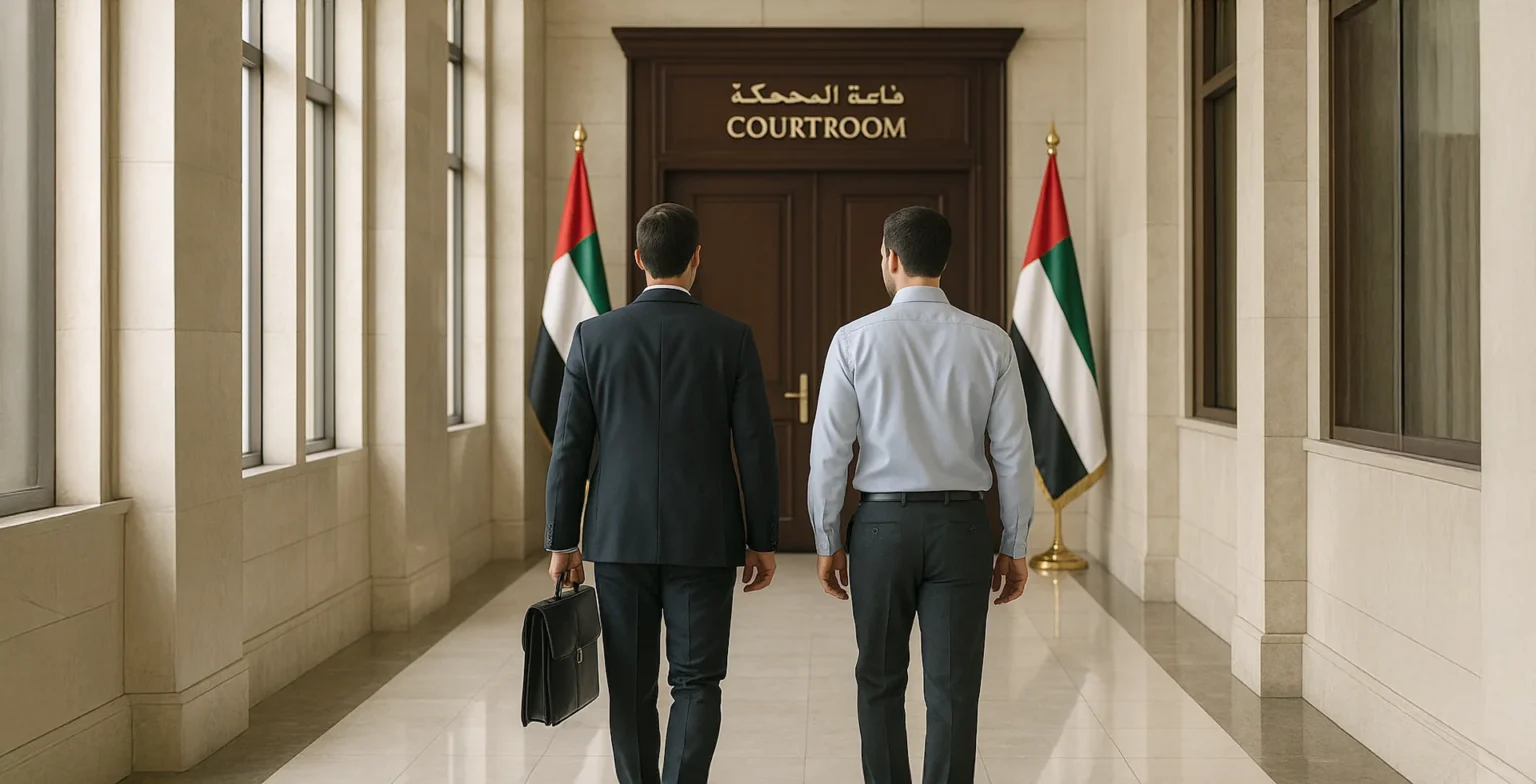
The UAE’s civil code was replaced on 1 June 2026. If your dispute is being assessed against the old law, it is being assessed wrongly.
MBM acts for individuals and businesses in UAE contract disputes — breach, non-performance, termination, enforcement and interpretation — and in the compensation and damages claims that follow from them. We also draft and review contracts, which is where these problems are cheapest to solve.
Federal Decree-Law No. 25 of 2025, Promulgating the Civil Transactions Law, took effect on 1 June 2026 and fully replaces the 1985 Civil Transactions Law. The foundation on which every UAE contract sits was replaced, and it happened months ago rather than years ago.
Reported changes include a codified duty of good faith in pre-contractual negotiations, revised civil-liability and damages provisions, and a reduction in the age of legal majority from 21 to 18. Separately, court procedure remains governed by Federal Decree-Law No. 42 of 2022, in force since 2 January 2023.
Because the civil law is this new, how it applies in practice is still developing. We treat it as an argument to be constructed carefully on the facts rather than a settled answer, and everything here is subject to applicable UAE law.
UAE Legislation — uaelegislation.gov.ae · DIFC Courts — difccourts.ae
Whether you are the party owed performance or the party accused of failing to give it, the analysis starts in the same place: the agreement, and what can be proved.
Goods not delivered, services not provided, milestones missed. We identify whether the failure is a breach under the agreement and what remedy it opens.
Delivered, but not to the standard agreed. These claims turn on the specification and on what evidence of the shortfall exists.
Being blamed is not the same as being liable. Frequently the other side has not performed its own obligations, or the clause relied on does not bear the meaning claimed.
Termination outside the contract’s own terms can convert you from the innocent party into the party in breach. The sequence and the notice matter.
Where an agreement has been ended without proper grounds or notice, there may be a claim for the loss that follows.
Loss caused by breach, negligence or a wrongful act. Where the claim is simply unpaid money, the faster route may be a payment order.
Genuine interpretation disputes are common and often resolvable without litigation once someone sets out the competing readings properly.
The 2026 Civil Transactions Law is reported to codify a duty of good faith in pre-contractual negotiations — a new avenue where information was concealed.
Drafting, review and negotiation. The clauses that decide disputes are cheap to fix beforehand and expensive to argue afterwards.
Assess, then escalate only as far as the matter needs.
We read the agreement against what happened and give you a written view of liability, remedy and realistic recoverable value — including where that value does not justify a claim.
Court, arbitration or the DIFC. Establishing this before filing avoids a jurisdiction fight that decides nothing and costs months.
Cure notices, default notices and termination notices, drafted so they achieve what is intended and do not create a liability of their own.
Loss has to be evidenced, not asserted. We build the quantum from the documents and tell you which parts of it are likely to survive challenge.
Most commercial disputes should settle. We negotiate from a prepared position, which is what makes settlement possible on reasonable terms.
Where the matter must be decided, we run it and then enforce the judgment or award.
You will have a view on merits, quantum and cost before you decide whether to proceed.
Tell us what was agreed, what went wrong and what you want. We will tell you whether the contract helps you.
We assess liability, identify the forum and quantify the loss, then set out the options and the likely cost in writing.
We serve the notice or open negotiations. A prepared position resolves more commercial disputes than a filed claim does.
Where it is needed, we bring or defend the claim in the correct forum, then enforce the outcome.
Contract claims are decided on documents. If there is no written agreement, say so at the outset — it changes the approach rather than ending it.
If you are about to send a termination notice, call first. Notices sent in the wrong sequence are one of the most common ways a strong position is lost.
A contract dispute assessed against the 1985 Civil Transactions Law is assessed against a law that no longer applies. That is a real risk right now, and it cuts both ways — it also creates arguments that did not exist last year.
General information on the current framework, not advice on your contract. Because the civil law changed in June 2026, older guidance found elsewhere may be out of date.
The available remedies usually include requiring performance, terminating the contract, and claiming damages for loss caused by the breach. Which is appropriate depends on the contract’s own terms and on the civil law position.
Since 1 June 2026 that position is governed by Federal Decree-Law No. 25 of 2025, which replaced the 1985 law and is reported to include revised civil-liability and damages provisions.
Start with the contract: most agreements set out termination rights, the notice required and any cure period for a breach.
Terminating outside those terms can turn you from the innocent party into the party in breach, so the sequence matters. Where the contract is silent or unclear, the civil law position applies and should be assessed before notice is given.
A damages claim generally requires a breach or wrongful act, loss that flows from it, and evidence of that loss. Establishing the loss is usually the harder half: invoices, contracts, accounts and correspondence showing what would have happened but for the breach.
Federal Decree-Law No. 25 of 2025 is reported to have revised the civil-liability and damages provisions, so the current position should be checked rather than assumed from older guidance.
Federal Decree-Law No. 25 of 2025, Promulgating the Civil Transactions Law, took effect on 1 June 2026 and fully replaces the 1985 Civil Transactions Law — the foundation of UAE civil and contract law was rewritten.
Reported changes include a codified duty of good faith in pre-contractual negotiations, revised civil-liability and damages provisions, and a reduction in the age of legal majority from 21 to 18. Because the law is this recent, its application is still developing and should be confirmed against the legislation itself.
Federal Decree-Law No. 25 of 2025 is reported to codify a duty of good faith in pre-contractual negotiations. That may be relevant where a party withheld material information or negotiated without genuine intention to conclude the agreement.
How far it goes is still developing, and any argument on it should be made carefully on the facts.
A claim may still exist, but it becomes an evidential exercise: purchase orders, invoices, delivery records, payment history and correspondence are used to establish what was agreed.
It is harder and less predictable than a written contract, which is why the first assessment focuses on what can actually be proved.
Usually the contract decides. Many commercial agreements contain an arbitration clause, and some point to the DIFC Courts, whose Small Claims Tribunal hears claims up to AED 500,000 and up to AED 1,000,000 where the parties agree.
Identifying the correct forum before filing avoids a jurisdiction fight that costs time and money and decides nothing.
That depends on the strength of the evidence, the recoverable loss, the counterparty’s ability to pay, and the cost of the route required.
We give a view on all four at the first consultation — including where the honest answer is that the claim is not commercially worth bringing.
Tell us briefly about your matter. Our team will review your enquiry and advise you on the appropriate next step. Everything you send is treated as confidential.
If you are about to serve or have just received a termination notice, please call.
A member of the MBM team will review what you have sent and come back to you with the appropriate next step.
If your matter is time-critical, please call +971 4 570 0204 rather than waiting.
Send us the agreement and the correspondence. We will tell you what it is worth, in which forum, and whether it is worth pursuing. The first consultation is free.